Poison Ivy is a common poisonous plant found throughout the United States. If you are a camper or hiker you have likely run into this plant on more than one occasion. Poison Ivy is not hard to identify even though it does have some resemblance to other no poisonous plants.
The Poison Ivy plant will generally have three leaves. The leaves are jagged with somewhat sharp points. The leaves are a light green to dark green color and will sometimes have red coloring towards the stems.
About 10% of the population has an allergy to the oil found on Poison Ivy. These people will get a rash from the slightest brush of the plant. In as little as a few hours or up to a week later, the skin will begin to itch and there will be small red bumps or in severe cases large puss filled blisters.
In less severe cases normally you will just have to wait out the reaction. Using several types of cream can help with the itching. Contrary to popular belief, scratching doesn't normally spread the rash. If you still have oil on your fingers or body it could spread the rash, but the rash itself and the liquid inside the rash can not spread.
Tuesday, July 29, 2014
Poison Ivy
Labels:
ivy,
leaves,
plant,
poison,
poison ivy,
three,
three leaves
Tiger Salamander photographs
These are some photographs of Tiger Salamanders. These medium sized amphibians make really good pets. They are easy to take care of and will live many years with proper care. Tiger Salamanders are yellow and black. There are several subspecies of Tiger Salamanders. The pattern for these amphibians can vary depending on the species and even between the same species. Tiger Salamanders are amphibians which mean they are cold blooded animals. Tiger Salamanders need the sun to warm up.
Tiger Salamanders start there lives in a larva stage which they will remain in for several months. At this time they are completely dependent on water. After they change to the adult form, they require water only to remain moist.
Tiger Salamanders will eat insects and occasionally small mammals such as mice. These animals are nocturnal and spend most of the day hidden underground. At night they hunt for small prey.
I took these photographs of Tiger Salamanders using a Canon 5D Mark II camera and a Sigma 180mm macro lens. For lighting I used an Alien Bee flash and a large octobox.
If you would like to license any of these photographs please email me at producttester999@gmail.com
Tiger Salamanders start there lives in a larva stage which they will remain in for several months. At this time they are completely dependent on water. After they change to the adult form, they require water only to remain moist.
Tiger Salamanders will eat insects and occasionally small mammals such as mice. These animals are nocturnal and spend most of the day hidden underground. At night they hunt for small prey.
I took these photographs of Tiger Salamanders using a Canon 5D Mark II camera and a Sigma 180mm macro lens. For lighting I used an Alien Bee flash and a large octobox.
This is a video of my Tiger Salamanders and some turtles feeding.
If you would like to license any of these photographs please email me at producttester999@gmail.com
Yellow Jacket photographs
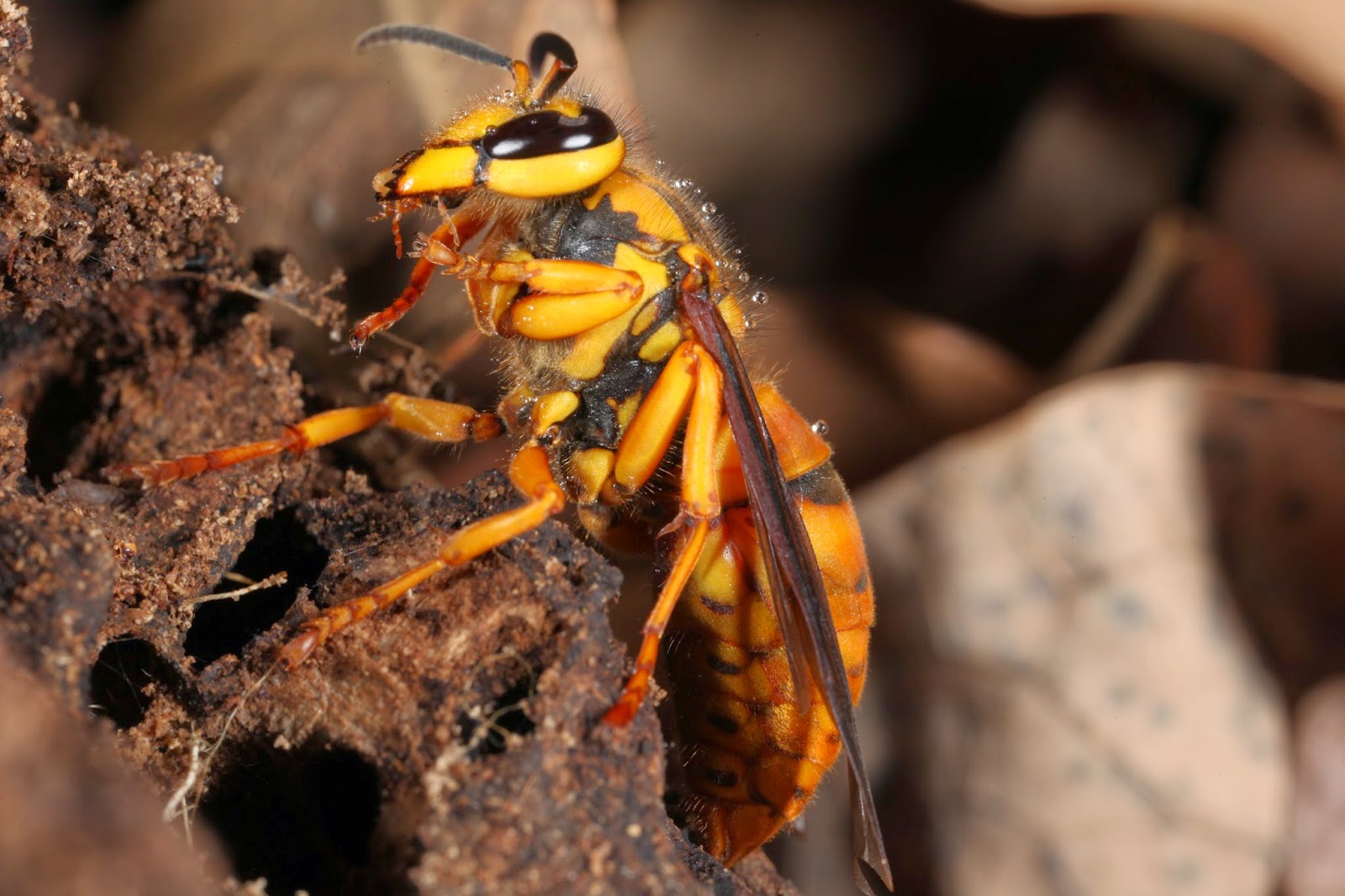
These are some photographs of Yellow Jackets. I found these Yellow Jacket Wasp under a log on a cold morning in spring. These wasp, just like most other insects, slow down and cant fly during the colder days. I was able to get these macro photographs of Yellow Jackets without any problems because the insects were cold and couldn't fly.
I shot these macro photographs of Yellow Jackets on my Canon 5D Mark II using a Canon MP-E 65mm 1x-5x macro lens and a Canon MT-24EX flahs unit.
Yellow Jackets are predatory insects that feed on necture, other insects and meat. They live in colonies and will fiercly defend their nest. Generally holes in the ground, bushes and other protected areas are used for nesting. Yellow Jackets are mostly harmless to humans except for a painful sting. Only people allergic have anything to fear.
These are some macro videos I took of Yellow Jacket Wasp.
If you would like to license the use of any of these photographs or videos email me at productester999@gmail.com
Jumping Spider photographs
These are some macro photographs of jumping spiders. Jumping Spiders are very common throughout the world. These small arachnids are named because they are quick and like to jump to capture prey and escape danger. Jumping spiders come in many different sizes colors and shapes. Jumping spiders have incredible eyesight and are very alert. These arachnids hunt by sight. When one of these spiders sees movement they will generally turn towards the movement or sometimes shy away if they sense danger.
Jumping spiders are mostly harmless to humans. Most are not aggressive and will not bite unless harassed. You can handle most jumping spiders without fear of being bitten.
I dont not know what exact species most of these are. I took these macro photographs of jumping spiders in Texas. Some were found in Austin, Dallas and Fort Worth.
I shot these pictures on a Canon 5D Mark II with either a Sigma 180mm or a Canon MP-E 65mm 1x-5x lens.
My favorite photographs are the first three where the jumping spider is on some pink colored flowers called Red Yucca. The jumping spider had actually caught another jumping spider and was eating it. I got a few photographs before the jumping spider got scared and dropped his meal. This was my first time to see a jumping spider eating another spider.
I shot these three photographs of jumping spider in Farmers Branch Texas in Gussie / Waterworth Park. Every year the park is full of flowers and roses. I usually find a lot of insects to photograph in this park. This was the first time I have seen a jumping spider eating another spider.
These are some videos I have taken of jumping spiders.
Labels:
arachnid,
bug,
insect,
jumping,
jumping spider,
jumping spider macro photograph,
jumping spider photographs,
jumping spider videos,
macro photographs,
photography,
predator,
spider,
video
Monday, July 28, 2014
Water Drop photographs
These are some water drop photographs I shot in 2012 or 2013. most of he water drops were staged using a spray bottle or a ziplock with a hole. The flowers were at Gussie park in Farmers Branch Texas just outside of Dallas.
I used a Canon Mark 5D II camera with a Canon MP-E 65mm 1x-5x macro lens. This lens will capture extremely close shots.
These are some of my favorite water drop shots. I have done quite a few.
I used a Canon Mark 5D II camera with a Canon MP-E 65mm 1x-5x macro lens. This lens will capture extremely close shots.
These are some of my favorite water drop shots. I have done quite a few.
Butterflies in the Garden - Fort Worth Botanical Gardens
Butterflies in the Garden at Fort Worth Botanical Gardens. These photographs of butterflies were taken at the Fort Worth Botanical Garden exhibit called Butterflies in the Garden in 2013. Every year the Fort Worth Botanical Gardens host a wide range of butterflies in early spring.
These photographs of butterflies were taken on a Canon 5D Mark II camera using a Canon MT-24EX twin flash and a Sigma 180mm macro lens. There were a lot of beautiful butterflies in the exhibit. My family spent about an hour looking at and filming the butterflies. I don’t remember how many there were but I would guess around 30 different species.
If you would like to license the use of any of these photograph contact me at producttester999@gmail.com
Labels:
butterflies,
close,
fort,
garden,
in,
macro,
photographs,
photography,
the,
worth
Striped Bark Scorpion
These are some photographs of a Striped Bark Scorpion. The Striped Bark Scorpion(Centruroides vittatus) is one of the most common scorpions found in the United States. These scorpions are mostly harmless except for a painful sting. Very rarely death can occur mostly in individuals that are highly allergic. Most stings occur by accident when someone steps on a scorpion. Scorpions like to hide in dark places so a shoe left outside becomes a good hiding spot for a scorpion. Striped Bark Scorpions are tan to light brown with two dark brown strips running down there back. These arachnids live mostly in desert or arid land. They can be found under rocks and debris during the day. At night Striped Bark Scorpions forage for food. These arachnid feed on small insects and other arachnids. Striped Bark Scorpions are found from northern Mexico through Texas and up to Nebraska.
These photographs of Striped Bark Scorpions were shot outside Austin Texas. I found the scorpion under a rock while I was hunting for things to photograph. They are quite common in this area. These photographs were shot on a Canon 5D Mark II using a Sigma 180mm macro lens. For lighting I use a Canon MT-24EX twin flash.
These are some videos of a Striped Bark Scorpion. In the first video you can see it is a female with baby scorpions on its back.
The second video is a Striped Bark Scorpion crawling on the ground.
If you would like to license any of these photographs or video contact me at producttester999@gmail.com
Subscribe to:
Posts (Atom)


.jpg)
.jpg)